How Custom Logistics Software Helps Businesses Streamline Operations
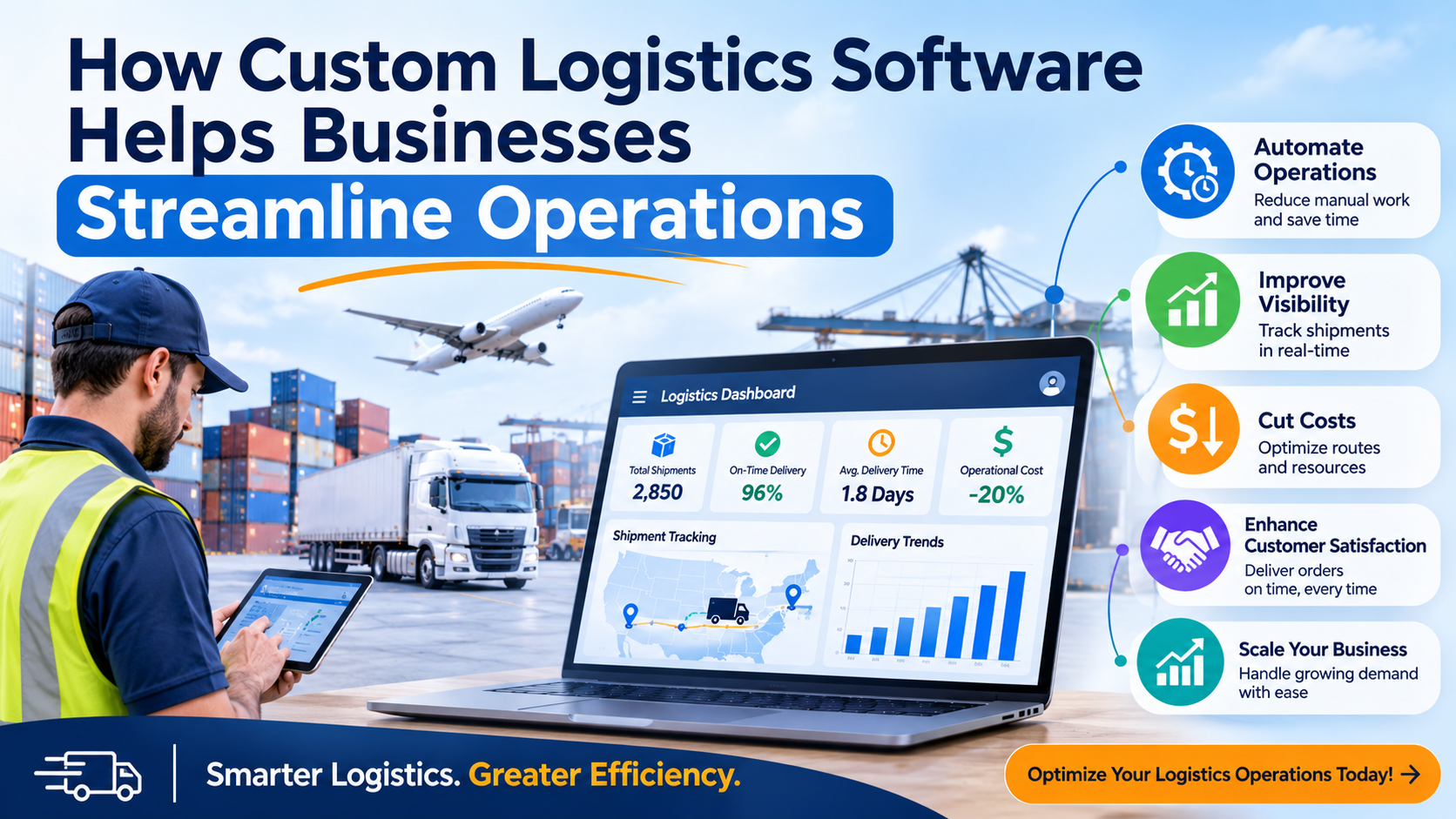
The logistics industry is evolving rapidly as businesses face increasing demands for faster deliveries, improved supply chain visibility, cost efficiency, and better customer experiences. Managing transportation, inventory, warehouses, shipments, and deliveries through manual processes or disconnected systems can create operational challenges and limit business growth.
This is where custom logistics software comes into play. Unlike generic, off-the-shelf solutions, custom logistics software is designed around a company's specific operational requirements, helping businesses automate workflows, improve coordination, reduce costs, and make smarter decisions.
Partnering with a reliable logistics software development company allows businesses to build scalable digital solutions that simplify complex logistics operations and support long-term growth.
Let's explore how custom logistics software helps businesses streamline their operations.
- Automates Daily Logistics Operations
Logistics businesses manage several repetitive activities, including order processing, shipment scheduling, dispatch management, documentation, and delivery tracking. Handling these activities manually consumes valuable time and increases the chances of human error.
Custom logistics software automates these routine processes, allowing businesses to manage operations more efficiently.
Key automation capabilities include:
Automated order processing and assignment. Digital shipment scheduling and dispatch. Automated invoice and documentation generation. Real-time delivery status updates. Automated notifications and alerts. By reducing manual intervention, businesses can improve productivity, minimize administrative workloads, and allow employees to focus on more strategic activities.
- Improves Real-Time Shipment Tracking
Shipment visibility is essential for modern logistics operations. Customers expect accurate delivery updates, while businesses need real-time information to monitor shipments and identify potential delays.
Custom logistics software can integrate GPS tracking, IoT devices, and mapping technologies to provide real-time shipment visibility.
Businesses can use these features to:
Monitor vehicle and shipment locations. Track delivery progress. Identify unexpected route deviations. Notify customers about delivery updates. Improve coordination between drivers, dispatchers, and warehouse teams. With better tracking capabilities, companies can increase transparency, improve customer satisfaction, and manage deliveries more effectively.
- Optimizes Route Planning and Fleet Management
Transportation costs represent a significant portion of logistics expenses. Poor route planning, traffic congestion, unnecessary vehicle movement, and inefficient fleet utilization can increase fuel consumption and delivery times.
Custom logistics software helps businesses optimize transportation operations through intelligent route planning and fleet management features.
These solutions can consider factors such as:
Traffic conditions and road restrictions. Delivery locations and priorities. Vehicle capacity and availability. Fuel consumption. Driver schedules. Delivery time windows. Advanced route optimization capabilities help businesses identify efficient delivery routes, reduce unnecessary travel, and improve fleet utilization.
- Streamlines Inventory and Warehouse Management
Inventory management is another critical aspect of logistics operations. Poor inventory visibility can result in stock shortages, overstocking, delayed order fulfillment, and increased warehouse expenses.
Custom warehouse and inventory management software provides businesses with centralized control over inventory activities.
Important features include:
Real-time inventory monitoring. Automated stock updates. Barcode and RFID integration. Warehouse location management. Order picking and packing automation. Stock movement tracking. Low-stock notifications. By integrating inventory management with other logistics processes, businesses can maintain accurate stock records, improve warehouse productivity, and fulfill customer orders faster.
- Enhances Supply Chain Visibility and Coordination
Supply chains involve multiple stakeholders, including suppliers, manufacturers, distributors, warehouse operators, transportation providers, and customers.
When these stakeholders use separate systems, information gaps and communication delays can affect overall operational efficiency.
Custom logistics software creates a centralized platform where relevant stakeholders can access accurate and updated information.
It helps businesses:
Coordinate activities across departments. Monitor supplier and shipment performance. Track purchase orders and deliveries. Share operational updates. Identify supply chain bottlenecks. Improve communication between stakeholders. A connected supply chain allows businesses to respond faster to operational challenges and maintain smoother workflows.
- Reduces Operational Costs
Managing logistics operations efficiently requires controlling transportation, labor, warehouse, inventory, and administrative expenses.
Custom logistics software helps businesses identify inefficiencies and reduce unnecessary costs through automation and data-driven management.
For example, businesses can reduce expenses by:
Optimizing delivery routes to lower fuel consumption. Automating repetitive administrative tasks. Improving warehouse space utilization. Reducing inventory discrepancies. Minimizing delivery delays. Improving vehicle and resource allocation. Over time, these improvements can contribute to better resource utilization, increased profitability, and stronger operational performance.
- Provides Data Analytics and Business Insights
Making decisions based on incomplete or outdated information can create challenges for logistics companies.
Custom logistics software integrates analytics and reporting capabilities that help businesses understand operational performance through meaningful data.
Businesses can monitor key performance indicators (KPIs), such as:
On-time delivery rates. Average delivery time. Transportation costs. Fleet utilization. Inventory turnover. Order fulfillment rates. Warehouse productivity. With centralized dashboards and automated reports, managers can identify performance gaps, recognize operational trends, and make informed business decisions.
- Improves Customer Experience
Customer expectations in the logistics industry continue to increase. Customers want reliable deliveries, accurate tracking information, transparent communication, and faster issue resolution.
Custom logistics software helps businesses deliver a better customer experience through customer-focused features.
These include:
Real-time shipment tracking portals. Automated delivery notifications. Estimated delivery time updates. Digital proof of delivery. Online order management. Customer support integrations. Providing customers with convenient access to shipment information builds trust, improves transparency, and strengthens long-term relationships.
- Supports Business Scalability and Flexibility
As logistics businesses grow, their operational requirements become more complex. A solution that works for a small operation may not support increasing shipment volumes, additional warehouses, new transportation partners, or expansion into new markets.
Custom logistics software is developed to accommodate changing business requirements.
It can support:
Multiple warehouse locations. Growing shipment volumes. Additional users and business departments. Integration with third-party platforms. New transportation and delivery models. Expansion into different geographical markets. Unlike rigid software solutions, custom platforms can evolve alongside business operations.
- Integrates Easily With Existing Business Systems
Logistics operations rarely work independently. Businesses often rely on ERP, CRM, accounting, eCommerce, warehouse management, and transportation management systems.
When these platforms operate separately, employees may need to enter the same information multiple times, resulting in inefficiencies and data inconsistencies.
Custom logistics software can integrate with existing business applications through APIs and other integration technologies.
This enables seamless data exchange between systems, improves workflow automation, and creates a unified operational environment.
Essential Features to Include in Custom Logistics Software
When developing a logistics management solution, businesses should focus on features that address their operational requirements.
Here are some essential modules to consider:
Order Management | Simplifies order processing and fulfillment |
Fleet Management | Improves vehicle utilization |
Route Optimization | Reduces transportation time and costs |
Shipment Tracking | Provides real-time delivery visibility |
Inventory Management | Maintains accurate stock information |
Warehouse Management | Streamlines warehouse activities |
Driver Management | Simplifies driver scheduling and coordination |
Analytics and Reporting | Supports data-driven decisions |
Customer Portal | Improves customer communication |
ERP and CRM Integration | Connects business operations |
The right combination of features depends on business size, logistics complexity, operational goals, and future growth plans.
Why Choose a Logistics Software Development Company?
Building a custom logistics platform requires technical expertise, industry knowledge, and an understanding of complex supply chain workflows.
A professional logistics software development company can help businesses transform their operational requirements into reliable software solutions.
An experienced development partner can assist with:
- Requirement Analysis: Understanding existing workflows, operational challenges, and business objectives.
- Custom Software Development: Building logistics applications tailored to specific business needs.
- System Integration: Connecting logistics platforms with ERP, CRM, GPS, payment gateways, and third-party services.
- Cloud-Based Development: Creating scalable and accessible logistics platforms.
- Quality Assurance: Testing software functionality, performance, security, and reliability.
- Ongoing Maintenance: Updating and improving the platform as business requirements evolve.
Choosing the right technology partner ensures that the software aligns with business goals and delivers long-term value.
How to Choose the Right Software Development Partner in the USA
Finding the right technology partner is an important step when investing in custom logistics software.
If your business is looking for a software development company in USA, consider the following factors before making a decision:
- Industry Experience: Look for a company with experience developing logistics, transportation, or supply chain management solutions.
- Technical Expertise: Evaluate its knowledge of cloud computing, AI, IoT, GPS tracking, APIs, and modern development frameworks.
- Custom Development Capabilities: Ensure the company can develop solutions based on your specific operational workflows.
- Integration Expertise: Check whether the team can integrate your software with existing business applications.
- Security Standards: Choose a partner that follows secure coding practices and appropriate data protection standards.
- Post-Development Support: Make sure the company provides ongoing maintenance, upgrades, and technical assistance.
A reliable development partner can help reduce implementation challenges and ensure your logistics platform remains adaptable as your business grows.
When Should Businesses Hire Software Developers for Logistics Solutions?
Not every logistics business has the technical resources required to build and maintain its own software. In such situations, choosing to hire software developers can be a practical approach.
Businesses should consider hiring dedicated software developers when they:
- Need a customized logistics management platform.
- Want to automate existing manual workflows.
- Require integration with third-party logistics systems.
- Plan to develop a mobile application for drivers and customers.
- Need advanced reporting and analytics capabilities.
- Want to upgrade outdated logistics software.
- Require ongoing technical support and product improvements.
Hiring experienced developers gives businesses access to specialized technical skills while allowing internal teams to focus on core operations.
Future Trends in Logistics Software Development
Technology continues to transform logistics and supply chain management. Businesses investing in custom software should also consider emerging technologies that can improve operational performance.
Some important trends include:
Artificial Intelligence (AI): AI-powered systems can support demand forecasting, predictive maintenance, intelligent route planning, and operational decision-making.
Internet of Things (IoT): Connected devices enable real-time monitoring of vehicles, shipments, temperature conditions, and warehouse environments.
Cloud-Based Logistics Platforms: Cloud technology provides flexible infrastructure, centralized data access, and improved scalability.
Predictive Analytics: Businesses can use historical and real-time data to anticipate potential disruptions and make proactive decisions.
Automation and Robotics: Automated warehouse systems and robotic technologies can improve material handling, picking, packing, and inventory operations.
Adopting relevant technologies can help logistics businesses become more efficient, competitive, and prepared for future industry demands.
Conclusion
Custom logistics software plays an important role in helping businesses streamline operations, automate workflows, improve shipment visibility, optimize fleet management, and reduce operational expenses.
From inventory management and warehouse automation to real-time tracking and advanced analytics, a customized solution provides the flexibility businesses need to manage increasingly complex logistics operations.
Partnering with an experienced logistics software development company can help organizations build scalable, secure, and feature-rich platforms that align with their operational objectives.
Whether you want to modernize existing systems, develop a new logistics application, or improve supply chain efficiency, investing in custom software development can create a strong foundation for sustainable business growth.
Ready to streamline your logistics operations? Partner with the right technology team, hire software developers with relevant expertise, and build a logistics solution that supports your business goals.
About the author
- Ryan Mitchell is a software developer at iQlance Solutions, a leading custom software development company in Texas that provides enterprise software solutions to businesses and SMEs.
Comments
Join the discussionNo comments yet. Be the first to comment.